

6 Ways to Recycle Used Coffee Grounds
Many of us have one and only one thing on our minds when we wake up in the morning: COFFEE. For many, the question of what to do with those leftover grounds always arises. Do you just throw them out? No! Did you know there are amazing ways to Use Used Coffee Grounds?
The smell of the glorious coffee bean is enough to rouse many of us from our sleep. Whether your preferred brewing method is a pour over for that delicious, ritualistic single cup, or a 12-cup pot that stays warm all morning and is there whenever you need it, we all have something in common. Some people like to use them in their garden and for their potted plants. Others have used them to mix up a stain for furniture and concrete countertops. But there are other uses, too.
6 Ways to Recycle Used Coffee Grounds
-
Odor Neutralizer
Place a small bowl of dried coffee grounds in your freezer to neutralize any unwanted odors.
-
Soap
What’s better than a hot shower to wake you up in the morning? A hot shower with caffeinated soap. That’s right, use your leftover grounds as an ingredient in your next bar of homemade soap.
-
Abrasive Cleaning Agent
Toss a few teaspoons of coffee grounds into that greasy, grimy fry pan from last night’s pork chops and scour it with a clean, thin dishrag. You’ll be amazed at how well this simple remedy works.
-
Pest Repellent
We love natural solutions to unwanted pests. Try sprinkling coffee grounds around problem areas. At your current rate of consumption, how long would it take you to sprinkle grounds all the way around the exterior of your house?
-
Ash Control
This summer, when you are cleaning out your fireplace in preparation for the first fall fire, consider sprinkling grounds around the collected ash before sweeping it up. This strategy helps reduce the amount of air born dust.
-
Exfoliant
Grab a handful of grounds whenever you need a little exfoliation. The grounds help remove dead skin and eliminate odors that may be on your hands after a night of cooking with garlic. You may also want to consider some DIY facial scrubs featuring this versatile vestige of your morning cup ‘O Joe.
Don't drink coffee but still want to experiment with the list below? Many coffee shops will also gift you, free of charge, their used coffee grounds. How's that for recycling!?

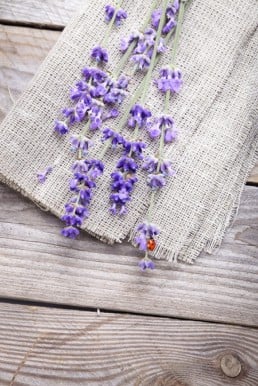
8 Powerful Uses for Lavender Oil
What is Lavandula Angustifolia?
It’s known for its ability to withstand heat and droughts. Its fragrance is well known in the perfume industry, and is recognizable to many. It’s occasionally used in the kitchen, to add a fragrant flare to entrées, desserts, and even cocktails. It may even be growing in your backyard right now, adding a beautiful hue to your landscaping.
Do you think you know the answer?
You probably guessed it. Lavender!
While the physical lavender flower is often used in the kitchen, it is the essential lavender oil that is commonly used in the perfume industry. But there are other uses for the essential oil that may be even more appealing and beneficial.
Essential oils have powerful benefits that can be used on a daily basis. They are an excellent to add to soaps, lotions, bug sprays, and face washes to create a non-toxic solution that works. As we have mentioned before, most personal care products are filled with toxic ingredients and preservatives that can cause disease and imbalance in the body.
Before, we explore the benefits of other essential oils like tea tree oil and citronella oil (one of the main ingredients in Osana's all natural mosquito repellent soap), let's learn more about the benefits of using the essential oil of lavender!
8 Powerful Uses for Lavender Oil
1. Aromatherapy: According to the May Clinic, aromatherapy can provide relief from anxiety and depression, and can also improve the quality of life for those suffering from some chronic health conditions. Squeeze a few drops of lavender oil into your palms and inhale the fragrance. You may also feel the calming effects that the oil has once the scent reaches your amygdala gland.
2. Bath Additive: Not only will adding a few drops of lavender oil to your bath provide you with an added aroma advantage, but it could also serve a couple of the purposes listed above. Additionally, the essential oil can help treat some circulatory disorders.
3. Muscle Relaxer: Many people credit pure lavender oil as helping to ease their tight, sore muscles, and it only takes a couple of drops. Simply apply to the sore areas and gently rub it in. You might also consider mixing it with a drop or two of an essential citrus oil.
4. Dandruff: Incorporating a few drops of lavender oil into your morning shower routine can help eliminate those pesky dandruff.
5. Minor Cuts: A drop or two of this versatile essential oil can help to stop the bleeding from a minor cut. Additionally, its natural properties help to clean the wound and kill bacteria.
6. Sleeping Aid: Inhaling the fragrance of lavender oil before hitting the hay, and rubbing a drop onto the surface of your favorite pillow, can aid in your sleep. Some folks use lavender oil to help combat insomnia. It’s calming, relaxing qualities go a long way on those restless nights.
7. Insect Bites: Are you noticing a theme? Lavender oil naturally soothes and calms, and this applies to minor insect bites, as well. So the next time you get bit by a mosquito, or stung by a bee, break out your lavender oil. A well- placed drop will do wonders for the itch and the swelling.
8. Mild Eczema: Simply mix a few drops of pure lavender oil with either coconut or sesame oil and apply topically. Many report significant positive results from using this primitive method to help treat eczema.
Sources:
National Center for Complementary and Integrative Health
DIY Home Cleaners
Have you ever looked at the label on some of your most frequently used household cleaning products? Give it a try sometime. You may find that most of the ingredients are unrecognizable and toxic. Many of them are chemicals that are significantly more harsh and potent than needs be for some of your basic cleaning tasks. Did you know that vinegar naturally produces acetic acid? Acetic acid (read: vinegar) disinfects, deodorizes, and degreases. It’s a powerful and inexpensive cleaning agent, and with a few added (natural) ingredients you can transform your entire cleaning cabinet into a few bottles of vinegar-based cleaning solutions.
Not only are these cleaners a natural (and effective) alternative to many of the chemically ridden cleaners available so readily on the market, but they are most often significantly cheaper, less wasteful, and better for the environment. Below are a few simple recipes to try out. You just might find that you prefer these easy, natural remedies to those expensive, abrasive cleaners you’re used to.
DIY Home Cleaners:
1-2-3 All-Purpose Cleaner
It’s easy. Just remember 1, 2, 3 (and then 5-7).
- Just add 1-part vinegar, 2 teaspoons lemon juice, and 3 parts filtered water.
- Then, for good measure (and a good scent) add 5-7 drops of lemon essential oil (available at many health food stores and, of course, online).
- Fill an empty spray bottle (either found in your recycling bin (*though remember to use one that contained a gentle cleaner and to rinse it thoroughly with soap and water*) or at your local supermarket) and use as you would any all-purpose cleaner.
Floor Cleaner
Those hardwood floors can be rather pesky to clean, but there is nothing like clean, shiny wood floors to welcome bring out the beauty of your home. This basic mixture can be used with just a rag and some elbow grease, but you can also use it in a refillable This recipe, like the last one, is incredibly simple (in fact, it contains the same ingredients):
- - ½ cup white distilled vinegar
- - 1 gallon of warm water
- - 2-3 drops of essential oil (lemon is always a viable choice, but other essential oils, such as lavender, orange, or clove, can really bring some of that springtime aroma into your home)
Disinfectant Wipes
For some of us, disinfectant wipes have revolutionized the way that we clean. They are a go-to for those of us that are constantly on-the-go, offering a level of ease and speed that can be hard to match with more traditional cleaning methods. Here’s away to hack those disinfectant wipes and make your own, reusable version.
Ingredients:
- - ¾ cup of filtered water
- - ¾ cup white distilled vinegar
- - 15 drops lemon essential oil
- - 8 drops lavender essential oil
- - 4 drops bergamot essential oil (optional)
- - Rag / old t-shirts / fabric for ‘wipes’
- Combine all of the ingredients in a mason jar (or other glass, sealable container) and mix together.
- Add pre-cut cloths (consider various sizes to accommodate various messes) to the jar and allow them to soak. Store them in a cool, dark place (to preserve essential oils) until you need them.
- When it’s time, remove a ‘wipe’, wring it out, and voila, you’re ready to tackle that mess!
More DIY Home Cleaning Recipes
- How to make your own soap here.
- How to make your own laundry detergent here.
- 10 Uses for a bar of soap (preferable Osana All Natural Mosquito Repellent Soap ;) )
Give these simple recipes and try and put them to the test with some of your spring cleaning tasks! Have your own recipe? Let us know!

Osana in the Amazon
This last February (2015), Principle Eric Sackler and his staff from Charles O'Dewey Middle School took 25 students from Brooklyn to the Amazon river Basin. Their mission is "Inspiring young minds today. Empowering leaders for tomorrow."
In researching mosquito protection, they came upon Osana and decided to give it a try and brought the soap along with them on their journey.

The staff and some of the students enjoyed using the Osana and left any unused soap for the people who run the the Wild Yarapa Amazon Jungle Lodge to use as well as the local villagers.
Eric Sackler, mentioned "the cause based side of Osana definitely made the product more attractive. We are very much involved in service with Penny Harvest, various Cancer programs, in Peru we brought school supplies for two villages. So the idea of supporting public health and prevention of infectious diseases appealed to students and staff alike. Using the product currently to see if it will help with New York and Long Island mosquitoes."

It is our mission for Osana to get into the hands of any person or any part of the world in need of protection and sanitation, while at the same time spreading the message of malaria and how people can join together to end this epidemic.
Are you going on a trip? Consider bringing Osana all natural mosquito soap along with you along with you and be apart of our journey of seeing dark places all around the world transformed with hope and healing as outlined in our three part future plan.
We would love to hear from you to see where Osana may reach next!
1.Email photos and stories to world@osanabar.com
2. Tag your Facebook, Instagram, Google+ and Twitter Posts with @osanabar and #osanaworld

Charities for Clean Water
 Water is making headlines, from flooding in Oklahoma to the draught in California. These are serious issues to consider. But there are other water-related issues that are worth considering, too, and though they may not be as close to home for some of us, they are close to our hearts. 783 million people in the world do not have access to clean water.
This concept may be hard for some of us to truly comprehend. For many of us, a glass of clean, purified water is just a few steps away. Some of us are always within an arm’s reach from a water bottle.
This is not the case in many regions of the Global South. In Africa, the average distance walked for water is 3.7 miles. Many women and children make the trip daily. Many of them carry heavy loads on their shoulders and heads. Here, we can get clean water from the tap in our kitchen. We can buy bottles of water at the supermarket, at the gas station. It’s served free in restaurants. It’s wasted every day.
Charities for Clean Water: If you’re in Texas, check out Replenish. Replenish is a non-profit organization that operates on the buy-one-give-one model. For every case of water you purchase, one child will receive clean drinking water for 3 years.
If you are in the UK, keep your eyes open for One water at Starbucks, Tesco, Holland & Barrett, and more!
Global Charities for Clean Water
Charity: Water offers several creative ways to create your own campaign, like shaving your head, hosting a book club, or throwing a party. You can also donate to their cause directly. Charity:Water offers some solid swag that allows you to advertise the cause while supporting it.
Water For People is an organization that is “in it for the long haul.” They are collaborating with some of the most brilliant and forward-thinking minds (and companies) around to end this crisis. Check out their 5-step action plan and find out how you can get involved!
Osana all natural mosquito soap is looking to partner with like minded organizations. Do you know of other ways to get involved? Spread the word, let us know!
References:
Signs of Dehydration
Like it or not, summer is quickly approaching. Temperatures are on the rise. The birds are waking up earlier and earlier, flowers are blossoming, your neighbors are outdoors more and more tending to their lawns, their grills, their recreation vehicles. You might be seeing more cyclists on your way to work, more runners out on the paths. It’s that time of year.
And with summer heat comes summer sweat. Whether you work it up while caring for your garden, tossing the Frisbee with some friends in the park, or going out for your daily run, that spigot is opened up a little wider as the months move along.
How Much Water to Drink?
And with summer sweat comes summer hydration. And it’s not just athletes that need to keep their bodies hydrated. Think of it this way: 55-60% of the adult body is made up of water, and that water serves multiple purposes. Your body, right now, whether you’re sitting in a climate-controlled office or riding a hot city bus, is using water to regulate its temperature. Water assists in the removal of waste, it lubricates joints, it delivers nutrients and oxygen to cells. In a word, it’s crucial to good health.
The age-old adage says that we should all consume 8 8-ounce glass of water a day (which totals 64 ounces, the equivalent of ½ of a gallon). The Institute of Medicine, however, recommends that, on average, men should consume closer to 125 ounces a day and women should consume 91. While consuming 64 ounces may be a good starting point, there are a plethora of factors that contribute to how much water a given individual should be consuming, for it differs greatly. For instance, if you live in a warmer climate you may need to drink more water. If you live at a high altitude, if you are older, or if you engage in strenuous exercise you will likely need to consume more water.
Signs of Dehydration
So how do you know if you’re getting enough water? Often when you are dehydrated your body will give you some signs. A few common symptoms of dehydration include:
- A dry, sticky mouth
- Decreased urine output and/or dark-colored urine
- Fatigue
- Thirst
- Dry skin
- Headaches
- Confusion
For some of us, consuming an adequate amount of water every day is natural. We may carry a water bottle with us everywhere we go, sipping on it habitually. We may consumer water at restaurants faster than the wait staff can fill our cups. But for others it may take a more conscious effort. If this is the case for you, consider carrying a water bottle with you, or keeping bottles of water at your desk or in your car. You may try to wear a blue bracelet or rubber band and whenever you notice that you’re wearing it, take a swig of water. (Check the produce aisle, often celery stalks are held by a blue band. Bonus: celery is comprised of 95% water.) Or you may find it helpful to set an hourly alarm on your phone and drink a cup of water every time you hear the chimes (or a clip from the latest T Swift release).

Osana's Future Plan
The number one goal of Osana is to help as many people as possible, in any way we can. At the moment, this looks like partnering with incredible organizations that are working in malaria stricken places, and donating our soap for them to distribute within the community.
Here in the States, we want to protect people from mosquitoes in an easy, non-toxic way as well as spread the word about the millions of people and children dying everyday from preventable diseases.
With that in mind, we are also very aware of the fact that sometimes helping is actually hurting. We want to contribute to the healing, growth, add development of communities rather than provide a quick solution with no lasting impact. This is why we have developed a three phase approach. This approach not only provides protection, it also provides job, and empowers the local economy.
Big Vision
Dramatically reduce and prevent malaria and sanitation based deaths around the world while empowering communities and creating jobs to support the local economy.
Phase 1: Immediate Relief
Provide immediate relief and prevention through our soap in villages in third world countries suffering from malaria and sanitation based illnesses. We do this by partnering with individuals that that already have established humanitarian and non profit organizations in poverty and malaria stricken places all over the world.
Phase 2: Education
Leverage the relationships we have built through the soap to provide education and educational material for self awareness and prevention. We are aware that prevention is key. It is our mission to provide communities with life saving information that they can apply and share with their family and friends.
Phase 3: Self Sustainability
Bring the manufacturing of the soap production into these villages to help promote economy and self sustainability. Simply donating soap is not enough. We need to empower communities and give them the resources they need to be self sustainable and successful in the long run. It is our goal to provide these resources that will create jobs, as well as malaria prevention tools.
Summary
If we simply sell and donate a massive amounts of soap but never attain phase two or three - we fail as a company. The trick is that the only way to get to two and three is through phase 1. We're already actively working on creating a universal pictorial based educational info-graphic for malaria prevention and relief.

When Helping Hurts
Intentions are not the problem. The intention, the motivation to help and to give assistance is extremely important and impactful. However, there are times when we may give in a way that is not as impactful and effective as giving could be.
This is not to single out and berate the idea of giving. Many individuals, companies, and organizations have made impacting contributions, both monetarily and physically, to those in moments of crisis around the world. Communities and individuals around the globe benefit from such relief, not only in countries in the Global South but also states, cities, and communities in our own backyards.
But there are times, situations, when helping hurts and may, in fact, do more harm than good.
When Helping Hurts
Consider this: your child is struggling with her 7th grade math homework and you, a loving, caring, well-intentioned parent do her homework for her. Is this going to help her complete her assignment? Sure. Is it, maybe, going to allow her to focus more energy on other homework tonight, or get an extra hour of sleep? Yes. But is it going to scaffold the learning and mastery of mathematic long-term? Is she going to be better off next year because of your help? Absolutely not.
This basic theoretical principle can be applied to some forms of giving, even when the intentions are pure.
 When we start to consider these ideas it is important to identify a few types of giving and assisting. The first is relief help, which serves exactly the function that the name implies. It is immediate and temporary. Another is short-term help, which can be viewed as being a sort of rehabilitating form of assistance. Then there is long-term help, which often embodies a very relational type of assistance, where there is often (in effective, positive situations) collaboration among the helper and the individual or community in need.
Perhaps the most important tenet to bear in mind when considering giving aid or assistance (be it monetary or otherwise) is to begin to establish a relationship with the individual, organization, or community that you are assisting. Direct and open communication (and collaboration) is the best way to ensure that you are providing the form of assistance that is desired. In this way you can begin to ensure that your assistance facilitates a lasting and impactful change, making the most of your efforts and building strong ties and relationships along the way. It is important to understand not only the needs and struggles of those to whom you are offering help, but also to understand their culture and beliefs.
The basic idea of careful and intelligent giving applies across the board. When working through an existing charity organization there are ways to ensure that your contributions are being made the most of. Independent organizations such as CharityWatch (www.charitywatch.org) and Charity Navigator (www.charitynavigator.org) exist to evaluate and monitor charities to ensure ethical practices and procedures.
At Osana, our goal is to provide all natural mosquito repellent soap to counties in need- but not stopping there. We have a three phase plan to help communities instead of hurting them, and this is the goal we will continue to pursue.

Spring Cleaning Tips
There’s an age-old adage that comes to mind this time of year: less is more. Spring, the season of change, of growth, of renewal. For some, this has a profound impact on our lives. Diets may change, new habits may be fostered, resolutions may be reinstated. For others, this time marks the annual purging of household clutter: Spring Cleaning.
Spring Cleaning. It’s a phrase that haunts many of the nation's youth. The ambition of the parents can equate to unwelcome pressure, chores, and obligations. Let’s face it, very few of those among us enjoy engaging in a deep, thorough cleaning the toilet bowl. Most of us enjoy spending our Friday nights with family and friends, maybe taking in a film or lounging in the warming springtime air with café lattes or frozen yogurt, not knee-deep in the flotsam and jetsam of everyday life, wading into closets and attics that have remained undisturbed since 1982.
But, they say, organization is key! And who are we to argue? In fact, they are right. Organization is key, and what better time than the spring to revamp and re-envision our homes?
Here are a few Spring Cleaning Tips
1. Room By Room: In a fever of ambition and excitement, many of us make the mistake of tackling too much too fast. This results in an initial phase of absolute chaos (it’s always darkest before the dawn…), where the room that once served as your living room now looks more like a locker on Storage Wars or an in-home studio on Hoarders. By tackling this project one room at a time, and choosing as a starting point one of the more manageable rooms, you can slowly begin to engage in the process, identifying stressors and developing processes along the way that enable you to take on those terrifying spaces.
2. Donate: This is where the less is more comes into play. If you’re going to be rummaging through artifacts of an earlier life, of an earlier species (one that got to sleep in on the weekends, one that didn’t have mortgages and life insurance policies), you may as well start a pile of goods that you can donate. After all, do you really still need that the sky-blue jumper, or those electric hair rollers, or the dress (or worse, the corsage) that your daughter wore to prom in 1999 (or you wore in 1982)? Not only will some young person fawn at the jumper when they find it at the local thrift shop, but you’ll have one less thing taking up space, and the thrift shop will make a couple bucks, which most likely makes a difference in your local community. It’s a win, win, win, win.
3. The Box System: It’s a tried and true method, most likely because of its ultimate simplicity. Set out three boxes (cardboard, rubbermaids, even garbage bags). Designate them: one for donations (see above), one for garbage, and one that is dependent on the room (if it’s a home office, consider one for recycling, if it is a child’s bedroom it might be for permanent storage (the garage, the basement, etc.), if it is a bedroom it might be for winter clothes. You get the idea.). This technique can provide you with a bit of structure, and the joy of filling boxes and carrying them out of your house brings with it a nice dose of serotonin.
Most can agree that clean feels better- it provides an atmosphere of peace. It is important to remember though that most cleaning products are toxic. Try using your Osana all natural soap to clean your self and your counters! Here is how you can turn the bar of soap into liquid!

World Malaria Day 2015
World Malaria Day is a day designed to recognize global efforts to combat malaria. It was established by the World Health Organization in 2007, and has been commemorated every year since on April 25th. Each year World Malaria Day has a specific theme, and this year’s theme, developed by the Roll Back Malaria Partnership, is Invest in the Future: Defeat Malaria. This theme encompasses the ambitious goals of Roll Back Malaria, the WHO, and other organizations, corporations, grassroots organizations, and individuals are working toward.
And these goals are ambitious. According to the World Health Organization, “The new strategy aims to reduce malaria cases and deaths by 90% by 2030 from current levels. Four countries have been certified free of malaria in the last decade and the post- 2015 strategy sets the goal of eliminating the disease from a further 35 countries by 2030.”
Though massive gains have been made in the anti-malaria movement over the past decade, malaria remains a disease that is causing devastation in countries, communities, and families around the world. In Africa, Malaria is still claiming the lives of almost half a million children under the age of 5 annually. Something has to be done.
This year, on World Malaria Day, help spread the word. Tell your friends, your coworkers. Tweet about it, share a post. Get active. Below are some links that will enable you to begin exploring the many ways involved:
1. Mosquitoes Suck: The Tour – Offering basic donation opportunities, fundraising options (check out the “Beans That Count” fundraiser!), and teaching and advocacy. You can even book a Mosquitoes Suck Tour stop at your school!
2. Nothing But Nets provides you with the tools you need start a sporting challenge to raise money. The sky's the limit here, from soccer games to swimming laps to hosting your own 5K. Not into sports? No problem, they offer other opportunities to get involved here.
Resources:

DIY Body Wash, From a Bar of Soap
Sure, some folks are bar soap folks. It’s been in bar form since they were kids. They don’t know what to do without it; don’t understand the appeal of a liquid body wash. They might not know the pleasure of a loofah and instead use an old cotton washcloth.
But for other folks the body wash is the only real way to go. Its consistency, its lathering abilities, its ease of use. Some claim it’s the best thing since sliced bread. But there are a few problems. First off, it can be a bit costly compared to its former, molded counterpart. Secondly, some great soap companies don’t make a body wash. Plus, most soaps are toxic.
Well, we’ve got the perfect solution: DIY Body Wash made from a bar (or two) of Osana’s all-natural mosquito repellent soap.
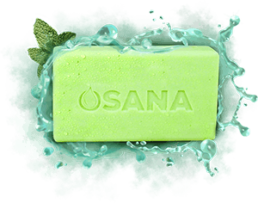
How to Make DIY Body Wash in Five Easy Steps:
Step 1
Using your favorite cheese grater, carefully grate up 1-2 bars of your favorite soap (we’re big fans of our own Natural Mosquito Repellent Soap, just sayin’) with the smallest grating option. You want your soap to be nice and fine when you’re finished.
Step 2
Heat 2 ½ to 3 ½ cups of water in a pot. The amount of water depends on two things: the type of bar soap you are using and the desired consistency. This is something you can play with a bit and perfect over the course of 1 or 2 makings.
Step 3
Add grated soap to the pan and stir, while you continue to heat it, until the soap dissolves.
Step 4 (Optional)
To add a little extra moisturizing power, add about a tablespoon of either Vitamin E oil or Coconut Oil.
Step 5
Transfer the mixture to a glass jar or a large bowl and allow it to cool for about 1 hour before transferring to a squeeze bottle or jar (the mixture will thicken as it cools). Manipulate the mixture to the desired consistency:
- Too thick? Heat it up again and add a little more water
- Too thin? Heat it up and add a little more grated soap
And voila! You’re done! You’ve got yourself some fancy schmancy DIY body wash that YOU made from your favorite bar of soap!
Please note, if you’re using Osana soap, for best results you still need to use the body wash consistently for 3 days before exposure to mosquitoes. Another thing to note is that this body wash will not lather as much as your typical store bought body wash will. If you’d like to replicate this, simply add in a little vegetable glycerin (available at most health food stores).
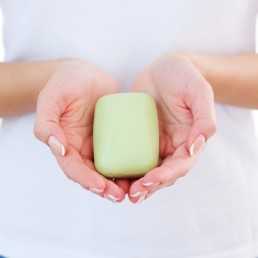
6 Common Toxic Soap Ingredients
 It can be so easy in the hustle and bustle of life to ignore the labels on products, or to neglect engaging in a really close investigation of the ingredients that are often found in our food, our cleaning supplies, and perhaps especially our personal hygiene products. After all, the products are designed to help keep us clean and healthy. Well, that may be true – in a sense – but it’s also true that your idea of what is clean and healthy for you and your family may differ from what some of the companies out there think is clean and healthy.
6 Toxic Soap Ingredients
Here is a list of 6 common soap ingredients to be on the lookout for. It may surprise you just how common these ingredients really are. Next time you are stocking up on your soap, shampoo, and body washes pay special attention to avoid products that contain any of the following ingredients.
1. Dioxane: Though it seems innocent enough as a synthetic derivative of coconut, dioxane is actually a known carcinogen. It is a chemical that is also toxic to many human organs, including the brain, the liver, and the kidneys.
2. Antibacterial Cleansers (Triclosan, Bensethonium Chloride): The Mayo Clinic has stated that recent studies have demonstrated that triclosan “alters hormone regulation in animals, might contribute to the development of antibiotic-resistant germs [and] might be harmful to the immune system. It is also known that triclosan can be absorbed through the skin.
3. Formaldehyde: Formaldehyde can often be found in soaps, but so can chemicals that release formaldehyde (such as diazolidinyl urea, monosodium salt, and quaternium-15 to name a few). As of 2011, the National Toxicology Program – a program of the Department of Health and Human Services, added formaldehyde to the list of known human carcinogens. Though much is known about short-term exposure to formaldehyde, little is known about long-term effects.
4. Parabens (methylparaben, polyparaben, ethylparaben, etc.): Though they primarily function as a preservative, studies have shown that exposure to parabens have increased a woman’s risk of developing breast cancer (as parabens mimic the hormone estrogen). Parabens have also been shown to cause neurological problems. Though most companies now avoid the use of parabens, it is an ingredient that may still be found on store or closet shelves.
5. Sodium Laurel Sulfate (SLS): SLS is perhaps the most common toxic ingredient found in soaps and shower gels. SLS is especially dangerous because of its ability to permeate skin very easily, which in turn makes it easier for other chemicals to permeate your skin.
6. PEG-6 (or PEG-8, or PEG-40, etc.): Used primarily as a detergent and foaming agent, PEG-6 is a very toxic ingredient often used in soaps. Some studies have shown that, like parabens, it can increase your chance of breast cancer. Some studies have also suggested that PEG-6 is also a kidney and skin toxin.
To ease your mind, Osana's all natural mosquito repellent soap does not include any of these :)
References